Friday, January 18, 2019

No Flowers, Please

We no longer feel the need to preserve our bodies, interred in the earth, to be magically resurrected one day. (We parted from this anachronism not because of spiritual evolution but because real estate is valued higher than humanity.) So we've become creative. Generally, we are cremated and either bequeath our ashes to loved ones or assign them field trips to disperse our remains in a location we found important during our lives.

Our ashes can be shot into space, compacted into jewelry, or any number of outlandish things. My favorite form of body disposal only recently became available: your unembalmed corpse can can be bundled around a seedling and serve as fertilizer that will grow a great tree. Imagine a forest of the deceased, our lives marked by trees breathing in the sky, rather than a graveyard of dead stone. A lovely idea. I used to want this. All of that changed when I nearly died.

I have always been an organ donor, which is achieved as easily as checking a box on your driver's license. After I recovered from open-heart surgery I became a card-carrying member of the United Tissue Network.


That card is always in my wallet, next to my insurance card, just in case anything happens.

The UTN provides for the utility and disposal of "whole donors," those who elect to donate all of their flesh to one cause or another - including after the harvesting of any viable organs. What is left of one's cadaver after organ extractions is donated to whatever cause or organization, be it scientific or educational, that can make use of it. (Silvia has often told me how fortunate it was for the pre-med students when a torso was delivered.) When all use is depleted all remaining tissue is cremated at the organization's expense and then disposed of as so much garbage, which it is.

Not a penny of expense is passed on to an heir, loved one, or survivor.

Doesn't this deprive the bereaved of an opportunity to mourn? That depends on what your wishes are and whether or not they are respected.

No one has my blessing to hold any kind of ceremony or observance in my name upon my death.

Registry for the UTN requires the signatures of two people, which Silvia witnessed. Later, she asked me: what would you say to anyone who wants to show kindness to you after your death?

"I would say pay it forward to someone who is still alive."

The time to show regard for another human is while they are alive, not when they are dead.

Funerals are for the living, so please don't insult the memory of the dead by pretending they are done by the deceased's benefit.

Showing regard for another human before they are dead does not require demonstrative declarations of love and devotion. It is accomplished as simply as making someone a sandwich, checking on a friend, asking them out to coffee, or inviting them over for an evening of pizza, cheap wine, and DVDs. 

Whatever you do, don't solicit the attention of another because you want to be checked on. Asking for help is fine and good, but don't cloak your needs in altruism; it is immediately transparent.

I am only in a position to give advice worth what is paid for it: naught. But this much I know: I lingered on the brink of death for so long that professionals appraising my medical records are astounded that I'm still alive. Also, my heart and lungs were stopped for five hours in hopes of keeping the reaper away. And after all that I honestly don't know that I'm out of the woods. Every loss I have suffered in this life has not thrown the profundity of mortality into a relief as sharp as seen by standing on the cusp of oblivion.

So yes, life is precious. It should be therefore valued in its presence, not absence.

We should stop feeding the Death Industry. We should instead focus on how many persons shuffle off this mortal coil without understanding how valuable they are to we who survive them.

I am not a model of this behavior. But I want to improve.

I start by saying this: no flowers, please. I won't smell them. Give them to another. 

Wednesday, December 5, 2018

"The Victims in the Willows" - Now Available!


Boating. Picnics. Murder.


Just another tranquil day in Willowdell.


"The Victims in the Willows," Book One of the Riverbank Dreadfuls, is an imaginative collision of the worlds of Arthur Conan Doyle and Kenneth Grahame; of Holmes & Watson and Rat & Mole; of serenity and horror; of light and shadow.

Join Ratty and Moley as they pursue the culprit of a grisly double-murder, racing against the clock before an innocent animal pays a bloody price.

The book is available in THREE formats!


The PAPERBACK and KINDLE edition are available on Amazon HERE.

The handmade, deluxe, limited edition hardcover is available only on my ETSY store (link HERE).

These books are painstakingly hand-stitched, bound and pressed one at a time, each copy requiring a full day for manufacture.


The inside covers are hand-detailed with (what I assure you are) fake blood stains. The front of each book bears the author's painted insignia, and each copy is signed by the author.


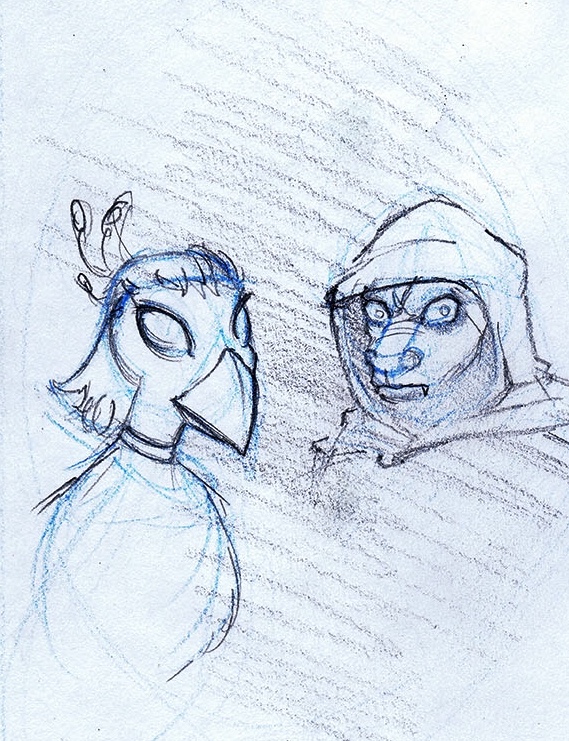
Every edition of the book features illustrations by JJ MacLeod and Jaylene Chung.

"I'm a haberdasher, not a hero!"
Our narrator, Ormond Sacker Molentine, illustrated by JJ MacLeod
"We have until nightfall; then death and madness have jurisdiction."
Our hero, Sherrinford Hope-Ratch Arvikohl, illustrated by JJ MacLeod
"I can endure anything apart from exercise and sobriety."
Concept art for Cecil T Buphon, esq. by Peter Hamilton
These colorful characters and several others are waiting for you in the pages of "The Victims in the Willows."

We'll see you on the riverbank.

Sunday, August 12, 2018

Boston Comic Con

Fan Expo Boston 2018 has just now concluded.

There we released the hand-made first edition of "The Victims in the Willows."


It's time to get back in the workshop and start binding more copies. I'm also currently working on making it available on Amazon (and possibly as an ebook).

To stay posted on when these versions become available I recommend following me on Twitter: @zoenecrosis and on Instagram: @zoenecrosis

Tuesday, March 20, 2018

Welcome to Willowdell...

I've been working on something for a while now, and I'm publishing it this year.


If you've ever seen a single thing I've worked on or created, you'll have seen the work of my long-time collaborator, Peter; and I can't wait to show you the illustrations he's been making for this project.


I have been keeping this pretty close to the vest for a long time, and only two other people apart from myself know the title.


But very soon everyone will be invited to visit a special place I call 'Willowdell'...


See you there...

Saturday, October 7, 2017

How I Wound Up Having Heart Surgery

In December of 2016 I began experiencing transient pains throughout my torso, originating in my lower back and traveling, through the month of April, up towards my collarbone. (The rib cage phase was particularly excruciating, and resulted in my waking myself and Silvia up at 2am to the sound of my own screams.) For roughly six months I would experience shivering chills, fevers, severe fatigue, night sweats, and unintended weight loss - the kind of weight loss that held its own against my eating tub after tub of Häagen-Dazs.

Because of difficulties in securing health coverage I could not see a doctor until April. When I met my new GP I was convinced I had Lyme disease. After all, I was very fond of taking walks through the Acton Town Forest, which was swarming with deer ticks. (I would sometimes do this wearing shorts; I was asking for it.) My new GP, Dr T, said that my symptoms suggested far too many maladies for her to know what it was, and had me tested for a battery of things, including Lyme. I also had a chest x-ray, a CT scan, and a simultaneous endoscopy and colonoscopy. The tests revealed that I did not have Lyme, or Hashimotos, or Tuberculosis, or anything else.

I saw specialists for months and still no one knew what was wrong with me. I was losing hope and lapsing into despair, for I would on average be functional for no more than four hours a day and would then need to lie down. During a pointless consult with a rheumatologist, who politely informed me that there was nothing he could do for me, he suggested I should see an infectious disease specialist. The next day I pleaded with Dr T to set up a referral for me. This idea never occurred to her because she was convinced we were searching for a malignancy. But she set me up with a referral. This is how I met Dr S in mid June. Within a few minutes of our meeting he diagnosed what was wrong with me: endocarditis (an infection of the lining of the heart).

That afternoon I had blood cultures drawn to test his theory. He called me regarding the results the next morning:

"We found the smoking gun at the scene of the crime." I was admitted to Lowell General Hospital later that day...

Let's go back a few decades.

I was born with a congenital heart condition called a Ventricular Septal Defect (VSD from here on). This basically means I had a hole in between the two largest chambers of my heart. At the time, when I was an infant, the doctors basically shrugged their shoulders and said to keep an eye on it. Having a VSD is not uncommon. In most cases it doesn't cause any problems. For most of my life it caused nothing more than a pronounced heart murmur. I had never really had a heart "beat," per se, just an odd sort of squishing noise.

Having a VSD caused me so little issue that I had actually forgotten I literally had a hole in my heart.

Fast-forward to me lying in a bed in Lowell General Hospital: my endocarditis had been going untreated for so long that the infection was now advanced. I had what they call "vegetation," a collection of clots and detritus, growing in my right ventricle.

This really should have killed me. The fact that I'm sitting here poking away at this keyboard is just dumb luck.

At Lowell General I was administered intravenous ampicillin (an antibiotic) for six days. Those six days at LGH were my first inpatient experience.

Those were a long six days and nights, not because of boredom, but because of my roommate. I never learned his name. In six days we never once spoke, made eye contact, interacted or communicated in any way. By some strange tacit agreement we both pretended we were alone in that room. Since I never learned his name I'll call him Fred.

I pitied Fred then and I pity him now, but he was also a curmudgeonly asshole. Some people, you can just tell, were never a ray of sunshine before infirmity struck. He kept his television on 24/7 at high volume. His behavior towards nurses ranged from curt to rude. He argued with the kitchen staff for complying with his dietary restrictions pertaining to his diabetes. Our room smelled like, well, crap.

On the other hand, I could walk out of the room and take my wheel-enabled IV drip with me. I didn't need television to keep my mind occupied, I could derive pleasure from reading and writing. I had Silvia as well as Nashla (one of my oldest friends) who took turns visiting me on alternate days.

They had taken one of Fred's legs because he ignored his diabetes for six years. The toes on the other foot were gangrenous. His dialysis appointments and eventual transfer kept getting postponed. He was visited on just one occasion by a party of two women, one of whom might have been his sister, and he was so disinterested in their visit that the three of them simply watched reality programming and advertisements.

During the first or second day of my stay in that room a physical therapist coaxed Fred into attempting to walk using his artificial leg and a walker. Fred grudgingly agreed to attempt it but made it clear he was doing so for placation alone. He was returned to the room in a wheelchair. No one tried to talk him into walking for the rest of the week.

On the last day of my stay at LGH they equipped me with a PICC line, a kind of long-term IV (useful for chemotherapy patients). A 38cm catheter ran from my bicep to my heart. For the next five weeks I would receive a continuous dose of ampicillin via PICC line all day and night. Apart from the fact that the pump would wake us up in the small hours of the night this was remarkably easy to live with.

By the time I left LGH I was free from chills, fevers, fatigue, and woke up dry rather than drenched in my own perspiration. I was practically skipping when I was discharged, and I left feeling blessed. My own heart may have been trying to kill me, but when I left Fred alone in our room I departed on two legs knowing that there were people who actually liked me, and that I was not so bereft of hope that I ever considered being rude to a nurse.

Now it was time to address the underlying problem: the defective heart that had turned my blood toxic in the first place.

...I wish that I could wear a sign around my neck that says NOT A JUNKIE for every interaction I have with any medical professional.

Dr S had warned me during our first consult:

"Anytime someone is diagnosed with endocarditis my colleagues generally say 'well, he must be a drug addict.'"

During my stay at LGH I met my cardiologist, Dr B. He said that the odds of a VSD resulting in an endocarditis infection are about 1 in 10,000. Because I won this cardiac powerball, every doctor and nurse who brushes against my case assumes I became infected because of a dirty needle. Sometimes I find ways of conversationally interjecting the fact that I have never done an IV drug in my life. Most of the time I don't bother because I assume that I will sound defensive.

I eventually consulted with a surgeon at Tufts Medical Center, Dr W. Meeting with him was a big deal; he, as a surgeon, is a big deal. Fortunately I seemed to convince him that I did in fact contract endocarditis without using a dirty needle, and that I had been relatively healthy up until this infection took over my life. I had a trans-esophageal echo-cardiogram as evidence.

"I suggest having surgery to close the hole," he said. Okay, I'm amenable to that, I think. Then, as if to answer the questions I should be smart enough to ask at this point rather than gaping, he says,"it is open heart surgery. The procedure will mean stopping the heart." Holy shit. He gives me a moment to process this. I ask, "would this also involve removing the vegetation from my right ventricle?" He nods, as if that's a given.

I enter the bargaining stage of the conversation: "Let's say there weren't any vegetation - would it then be hypothetically possible to close the hole by... going through a vein like they do sometimes?" What I mean is called 'laparoscopic,' and Dr W shakes his head to that idea. "The hole is too big to be closed that way." Rather, he proposes removing some of my pericardium tissue, the sack that envelopes the heart, and using that as a patch for the hole.

"Shall we set a date for surgery?" he proposes. What the hell... Okay. From a folder he brought with him to the meeting he produces a form for me to sign. In very simple language it says that I agree to the proposed operation: 'surgery to close hole in heart.' Below this is a blank line in which another option is meant to be offered by the Dr. He has written in that space: 'no surgery.' In signing it I make it clear I understand the risks involved in the surgery, which include 'stroke, heart failure, and loss of life.'

I can't get over the phrasing, "loss of life." Did the people who wrote this form felt it was important to offer a soft euphemism for "death?" Were they afraid patients would be reluctant to sign it if they used words more blunt that mean the very same thing? Is "loss of life" easier to face than "death?"

We set a date for surgery, Dr W shakes my hand, gives me his card, and we go our separate ways for the time being.

I won't make this entry longer by going into the drama entailed in my surgery being postponed at the very last second and then being rescheduled for a month and a half later. What's important is that I didn't lose the second surgery date, which I was nearly convinced I would. I was convinced I was going to catch a cold because of how many sick people I was surrounded by in the last days leading up to my surgery date. If I showed signs of being ill when I showed up any number of professionals from the anesthetist on up could put the kibosh on the procedure.

I knew I needed this operation. I had time to see my cardiologist, Dr B, once more before the surgery. He endorsed my having it. "And Dr W is who I would suggest having do it; him and maybe five people I can think of." I also saw a specialist in congenital heat defects, Dr Z. He said "if you get endocarditis because of a VSD once it is going to happen again; it's only a matter of time. You should have the surgery."

That settled that.

I wondered what state of mind I would be in when I was days, hours, or minutes away from a procedure that involved cracking open my sternum, stopping the electrical signals going to my heart and lungs, having a machine pump blood through my body, and then hoping everything started working again once I was sewn back together. The answer is that I was too busy worrying about getting sick and losing my surgery date to worry about actually having it.

MONDAY

Silvia drove me to Tufts and we checked in to surgery at 6am that morning. They took me aside so I could put on hospital clothes. Then they brought Silvia in to spend some time with me. All systems go. This was going to happen. Was I going to panic? Was I going to freak out? Was I going to beg for a sedative to calm my nerves? No. In answer to the situation, I went blank. My mind responded to the occurrence by not allowing me to contemplate what was going on. I wasn't aloof, I was present. But my brain didn't allow me to panic or react significantly to anything, even when a nurse was botching an attempt to put an IV in my hand.

My glasses and possessions were taken away and my bed was wheeled into a room composed mainly of stainless steel, or so my blurry vision suggested. There were elevated windows where, presumably, an operation could be observed. Dr W wasn't in the room; I guess he was showing up later.

"Just so everyone in this room knows," I said, "that antibiotic ointment I was told about still hasn't been put in my nose."

"That's okay," someone reassures me.

One of the doctors - one of the anesthetists? - is narrating what's going on, as if this is being recorded, which I assume it was.

A breathing mask goes over my face. And this is where time splinches.

I can't properly sort out the temporal order of the next moments that I experienced.

The bed I'm on is moving. Two nurses heave me from one bed to another. I am being scrubbed, head to toe, with an orange material (I assume to prevent infection).

I become aware that I am in the ICU and that I did, in fact, wake up after the operation. That's nice.

As I dreaded, I become aware that I have breathing tubes in my throat. I want them out, desperately. I cannot speak. My limbs, as far as I can tell, are hardly responding. I don't intend to touch my breathing tubes, but in my delirious state I try to use hand and arm gestures to indicate that I am aware of the tubes and don't like them.

"Okay, let's do the straps," one of the nurses finally says. They tie my arms to the side of the bed to prevent me from pulling these damn things out of my throat. When I gather up enough concentration I use my right hand to pat the bed, indicating I want their attention, then I point to my mouth. They make placating sounds and words, suggesting they understand what I want, but that I have to wait. We repeat this interaction. After what feels like an eternity someone enters the room, glances at something, says "yeah," and they begin liberating my windpipe. First one tube is extracted and I hardly feel any relief. The second tube feels like it had a balloon at its end, and when it is extracted I gasp and finally feel my lungs moving of their own will.

They keep me mercifully sedated and comfortable for much of this day. At some point Silvia shows up - Dr W had called her when I was out of surgery. I try to interact with her but I cannot speak - it comes out in hoarse whispers every time I try. Both she and the nurses have to lean in towards my face to understand whatever I'm trying to say. I have no memory of what I could have been saying.

Though not unconscious I am too fatigued to keep my eyes open, so Silvia reads from her book until it's time for her to leave.

At some point that evening a nurse asks me if I would like to try to walk. That sounds impossible to me. I do not attempt it.

TUESDAY

When I no longer need to be on what seems like nine IV drips anymore they say I can leave the ICU. They help me into a wheelchair. As I am being wheeled out an elderly man in a chair says "you're lucky to be leaving that room." I have just had an IV shot of dilaudid and cannot articulate an intelligent reply.

They take me to the cardiac ward and show me to my room - I get a room all to myself! I'm embarrassed by the luxury of not having another Fred with me. The wheelchair ride made me a bit nauseous so as soon as we arrive I vomit into a bucket and then immediately feel terrific because I'm still buzzed from the dilaudid.

I am eager to try walking that night and confused when I find that it is very difficult. I wobble.

My hand-eye coordination is also decidedly impaired. I reach my hand to where I think my face is and find that my hand is still inches away from it. I am told this is a normal side-effect of being on bypass for several hours and that I will be back to normal in a week or so.

The nurse who brought me orange juice by request the night before, and then stayed to watch me slowly bring it to my mouth, says that I'm doing fine and she was impressed with what she saw. "Most people on their first night end up throwing their food over their shoulder."

WEDNESDAY

A rough, painful day. They started pulling things out of me that morning. Most painful of all were the chest tubes. They had flat ends which lay spread underneath the skin. By the time they had been scooped out and sutured there were runnels of tears flowing down my face. I really wish I had asked for a shot of dilaudid before they started in on me.

A young RN Trainee who has no one to tend to that day but me has had time to glance at my medical record and ask me about its vagueness. "It just says you got endocarditis but not much else about that." I explain that I got the infection from the heart defect I came here to have surgically fixed and that I have never done an IV drug in my life. She says that makes more sense. "You don't seem like the kind of person to get endocarditis."

I upped my walking ante that night and did several laps of the cardiac ward. I looped around enough to eavesdrop on the nurses' workplace gossip.

Later that night, when it was quiet, I came face to face with something I'd never experienced before: a heartbeat. It was throbbing - pounding - like it was going to burst out of my chest. I may have had an anxiety attack. For the first time I used the button that summons a nurse. 

I was still wired and being monitored, but they did an EKG all the same and said that my pulse was high but my readings looked okay. They gave me a Clonipin. An hour or so later I managed to get to sleep.

THURSDAY

I'm walking unaided and almost everything has been disconnected from me.

Just before lunch Nurse V says I can be discharged as soon as I can get a ride together. I call Nashla because I know she doesn't have work on Thursdays. She's as surprised as I am that I'm being discharged after just four days but apparently I'm ready.

Nurse V pushes me in a wheelchair and escorts us to the parking lot. Walking is still tiring and there's only so much I can do in a day.

The car ride home is exhausting, not because there's anything wrong with Nashla's driving, but because everything is exhausting.

Friday morning I wake at home in excruciating pain. Mornings would be rough for a while.

They are gradually getting better.

As I type this I am an estimated five weeks away from a full recovery. Until then I cannot drive and I cannot lift anything heavier than five pounds. There is wire holding my sternum together and it needs time to heal like any broken bone. (I wonder if I will set off metal detectors from now on.)

I try to make time to walk a bit each day. I am making progress but confounded at how easily I become fatigued. One year ago we ran a 5k. Now I need a lie-down after a walk through the grocery store.

And then there's my new heartbeat. When I lie awake at night I can feel it reverberating from my face to my feet. I tell myself that it is normal, that I'm simply not used to it. Having a heartbeat, I suspect, is going to take longer to adjust to than anything else.

Still I am grateful. I think everyone should have the chance to be temporarily infirm and hospitalized so they can have thrown into sharp relief the many things we take for granted. Take walking, for example. Fred won't be doing any more of that than he has to for the remainder of his life. Me? I'm fantasizing about the day I might be capable of running again.

Things I've Learned

The original title of this entry was "Posthumous Notes." I had composed it staring open-heart surgery in the face, and post-dated it to publish far enough in the future that I could delete it if I survived the operation. I lived. And then I decided, just this moment, to publish it anyway. Maybe I'll add to this list or revise it in the future.

In no particular order, here are a few things that I've learned in this lifetime:

1. Shave with the grain; then against it.

2.  First drink a glass of water. Wait a moment. Then see if you still want it.

3. Try to remember the sage words of Special Agent Dale Cooper: "Every day, once a day, give yourself a present. Don't plan on it, don't wait for it, just let it happen. It could be a new shirt from the men's store, a catnap in your office chair, or two cups of good, hot, black coffee."

4. Never pass up an opportunity to hydrate or urinate.

5. In composition: your words may be the only thing that remains of you, so omit the needless ones. Do not impress; be direct and coherent; remember that you are engaged in an act of telepathy.

6. Women are stronger. They just are. If you disagree then thank the patient and tolerant women in your life for allowing your abiding delusions.

7. Just because it is legal and commonly consumed does not mean it is anything more than a low-grade poisonous drug aggressively advertised to you by avaricious villains.

8. Resist the temptation to seek help from those who are not qualified to give it.

9. We are encouraged - often required - to plot our paths at an age when we cannot know that those courses will be shortly unsuitable. Holding onto them once you are a different person is taking another person's medicine: potentially toxic.

10. Take the time, on occasion, to listen to the music that has brought you joy in the past. Do nothing else during this respite (unless you feel the desire to dance).

11. Don't forget to breathe.

12. Burn the candles before they melt in the attic. Wear the nice shirt for which a deserving occasion hasn't arrived. Wear that dress to the picnic despite the threat of dirt.

Tuesday, July 18, 2017

By Your Side


I bought this teacup when I got out of the hospital.

After several months of fevers and severe fatigue an infectious disease specialist finally diagnosed what was wrong with me: an advanced case of endocarditis. At home I am connected day and night to a home IV kit that pumps a steady stream of antibiotics into my blood. Presently I will require surgery.

The teacup I had my eye on for some time. It was made by a Londoner named Ali Miller. She created this design within weeks of her partner's father passing away. She calls it "By Your Side." The assemblage combines personal imagery with iconography referencing life and death.

I bought it because I was appropriately shaken up by my recent (and ongoing) experience. How cavalier I had previously been about my own mortality.

This teacup reminds me, every day as I take my morning tea, that death recently tapped me on the shoulder and said "hey! I am not a distant, amorphous abstract; I am right here, by your side."

So get a move on.


Monday, February 27, 2017

Lego Us In Hogwarts

Sometimes Silvia builds elaborate, original Lego constructions as a way of unwinding after work. She recently recreated the grounds of Hogwarts. She gave each of us a cameo.


I've got my nose stuck in a book on the way to the boat house.


Silvia is on the edge of the great hall with her bear and her... pet of some sort.

Here's a sweeping, musical tour of her magnificent creation:

Sunday, December 25, 2016

December 25th, 2016

After many years of wishing I have finally received warm woolen socks as a Christmas present. Zoe is a free elf!


Sorry, Albus. Better luck next.... Sorry.

Happy Rod Serling's Birthday, everyone!

Thursday, December 15, 2016

Old Man Yells At Crowd

(Or: Peter Murphy Show: Cambridge: Middle East Downstairs: 12-9-16)


I have always struggled to understand why we go to shows and concerts (specifically of the rock and pop variety). At a live jazz show we can marvel at the art of improvisation. At the symphony we can appreciate the influence of the conductor and the power of the orchestra amplified in a concert hall. But at rock and pop shows the audience is effectively paying to listen to an inferior version of the songs whose studio masters we already know by heart.

Why? To stand in awe of a star’s presence?... To see a man fall apart on stage and shout at several persons throughout the night?

A month before the show, when Silvia informed me that she had acquired tickets for us, I was optimistic about the evening's prospects, despite my aforesaid reservations. I recalled enjoying myself at the other two Peter Murphy shows I saw well over a decade ago.

Middle East’s “Downstairs” venue hosts a monthly goth-industrial club, Xmortis, and the Peter Murphy show is synergizing with said club night on this occasion.

When we arrive in Cambridge all I can think about is the cold. The cold.

The girls suggested we’d have no problem getting parking near the venue, and I sympathized with the desire to defy pricey coat checks. So I didn’t wear an overcoat or hat. This was a mistake.

My outfit: a thin v-neck t-shirt, a decorative (ineffective) Parisian scarf, a jacket with the insular strength of cheesecloth, cheap skinny jeans and thin boots. My toes remained numb until two hours after we were admitted indoors.

This was after standing in a half hour line outside in 20 degrees Fahrenheit weather. I was shivering violently.

The queue should not have been necessary, but one person alone was handling the sale of tickets, the Will Call, and the checking of IDs. The tip of the iceberg regarding the venue’s incompetence and apathy.

Apart from the bartenders, anyone who showed up to work that night wished they hadn’t.

Would the show have intentionally started an hour late even if the venue had managed to get people indoors on schedule? I’ll never know.

Before the show begins Silvia tells me that she has discovered that for $200 a pop attendees can participate in a meet and greet with Murphy after the show.

Sound problems caused loud pops and hisses for the first half of the show. Sound checks? Bah!

How cadaverous Peter Murphy looks, I can’t help but observe from the back of the hall. Is that an affect or mere entropy?

At 9:45pm Murphy trails out of a song by shouting. A few security guards can’t be bothered to have any regard for some white guy from the UK so they are eating their lunch on the side of his very small stage. They are as much on display as Murphy’s two accompanists.

“Fuck off out of my sight!... Don’t yell at me!”

In our society, the worst thing that can befall a human is being disrespected, so rather than show deference the three security guards challenge and threaten Murphy.

It’s an irony I’ve never been able to reconcile, that those who are hired to act as ‘Security’ are inevitably those from whom one most needs protection.

“Security’s challenging me? Seriously?” Murphy removed his guitar and left the stage.

The small part of me that counts the minutes until outings are over – that wants to go home where it is warm and read a book – is secretly hoping that the evening might come to an abrupt end.

Behind me, just outside the venue’s glass doors, security is being made to explain themselves. I can’t make out a word, I can only read demonstratively defensive body language.

Nine minutes later Murphy returned. Venue management, having no choice but to get involved, arranged for no more picnics to take place on stage during the show.

“This fuckin’ guy kicks three thousand dollars worth of [indecipherable]!” Then he launches into ‘King Volcano.’

Later, Silvia and I would compare notes, both surprised at the amount of Bauhaus songs in the playlist.

Between encore songs Murphy is rehashing the security issue. A mealy-mouthed person from the crowd apparently accuses him of bias against security because they were black.

“Fuck you, you fucking Boston cunt!”

Then it turns political. “Like the English haven’t been fucking racist against the Irish for centuries?!” One girl in the back is impressed by this point.

The election is brought up. Murphy soon declares that the heckler needs to go if he’s going to continue.

Then, after yet another confrontation that might’ve left me shaking if I were in his place, he goes right into the next song on the list. Is he not phased? Is this hostility normal? Is the performance of these tunes such rote memory that no real presence is required?

‘Bela Lugosi’s Dead’ is the final song. Silvia wonders if the performance were meant to emulate the opening scene from The Hunger.

Nashla, who disappeared hours ago, managed to wiggle her way to the front of the stage. Her vantage point plus her double whiskey equal the decree that it was a great show.

I can’t help but reflect on the previous two Peter Murphy shows I had seen, which were graceful, beautiful, harmonious, and full of his solo work rather than dissonant Bauhaus classics. The clunky analogy I cannot get out of my head is Rocky to Rocky V. In the former an earnest champ performs valiantly and inspires. In the latter a punch-drunk has-been is getting into fights in the alley for nickels.

The DJ begins spinning tunes. The lights eventually dim. The club Xmortis commences. The goths and rivetheads begin dancing on a floor decorated with dozens of plastic cups and empty beer cans.

Silvia points out that the DJ actually uses folders of CDs rather than a laptop. I’m impressed. His selections are good. I can’t bring myself to dance but am happy that the girls can and are.

Wednesday, August 10, 2016

Except From My Dream Last Night

"Now you have to decide whether you want your ashes thrown away or placed with a dog."

"What do you mean with a dog?"

Enter image of Scottish Terrier with a small wooden cask hanging around its neck.

"And where is the dog going to go?"

"Wherever it goes; on its adventures."

"Sold."

Tuesday, June 21, 2016

"Broken Glass Like Wind Chimes"

(Or: Travelogue: "New York With Kallie")

Kallie talks to animals and forgets to eat. She is musical by vocation and avocation. I like to think of her as the Snow White of Queens.

She has lived in New York for years and until she invited us I had never visited. Television and movies did a thorough job of filling my head with assumptions about the Big Apple all the same: litter skips down every avenue like tumbleweeds; in Central Park they hunt for murder victims like they were Easter Eggs; car horns are always blaring, day and night; and the populace is of a temperament ranging from hostile to feral.

Kallie allowing us to bivouac in her unusually capacious living room allowed me to seek an answer to these questions and another: why does anyone live in New York?


THURSDAY

New Yorkers' favorite hobby is honking car horns. They especially enjoy honking at a car in front of them if a pedestrian is crossing which someone has opted not to hit. Pedestrians are bad, and should be struck with every given opportunity. Honking a car horn in order to arrive at the next light 0.5 seconds faster is the only modus operandi conceivable.


Kallie has been hit by taxis. She tells us this after we park, settle in, and set out on foot in search of food. Nearly a decade ago, shortly after she moved here, she saw a homeless man get run down by a taxi.

"The cab ran over him, then backed up over him, crushing his limbs, then drove over him again in order to drive off."

She called 911 and waited with him for an ambulance to arrive.

"What a lovely place," is all I can think of to say in response.

Her neighborhood is very Greek, and so is the food. Per my request, we opt instead for sushi for our first dinner in Queens. Location: GoWasabi at 34-02 30th avenue.


Whenever feasible, I like to sample sushi when we travel, hoping that some day I'll find an area that combines the quality, selection and reasonable pricing I was spoiled with in Southern California. New England is an utter wasteland when it comes to edible sushi.

Both Kallie and I appreciate that Go Wasabi's sushi rice is the correct temperature - body temperature, not cold. It's sad how many sushi places serve cold rice. Most sushi places know they can get away with serving a mediocre product because most of the philistines who consume sushi in this country are drowning it in so much soy sauce and fake wasabi that they can't taste the difference between hamachi and saba... But I digress. The worst criticism I can level at a sushi place is if I touch the soy sauce, and I did not do this at GoWasabi.


Silvia opted for the bibimbap, her favorite Korean dish.


After dinner, on the way to Kallie's local for a nightcap, we pass a place she discovered is "a front" where her friend, while Kallie was in the restroom, was asked how much for Kallie; "yeah, we buy girls here." Moving on.

Kallie's local, which does not arrange companionship, is the Sparrow Tavern. It's a cozy place, albeit steeply priced, and has a good music playlist. We enjoyed hearing Total Coelo's "I Eat Cannibals" during our visit.

I was full of calories and wired. Fortunately, Kallie keeps an insomniac's supply of sleep aids on hand. I passed on the Valerian (ineffective) and melatonin (nightmares) but was intrigued by what she called "ID NyQuil." I had three (or so) capfuls and a few doses of diphenhydramine to hedge my bets. Once I reached a semi-conscious state the ghostly wails of the train and its clanging steel girders caused reality to tessellate into an alternating pattern of light and dark. It was a semi-synesthetic experience comparable to salvia, but not nearly as horrific.

FRIDAY


The Metropolitan Museum of Art is big. Louvre big. In 8 years Kallie feels she has barely scratched its surface.

The crowd on the front steps is bad and the crowd just inside the doors is much worse; a public bath of viscous, human filth.

That's another thing I learned about New York: the words "excuse me," "pardon," and "sorry" have not been uttered in the city for nearly a century, historians estimate. One is simply elbowed or shoved impersonally and without regard.

The general din diminishes further inside the museum. Within its depths the only bothersome trigger are the many people who insist on touching priceless works of art. Whenever I see a person do this I feel compelled to stab them in the face. The less malignant class of philistines merely block the works while taking selfies.

"Tomorrow is Never" (1955) by Kay Sage, one of the most prominent women associated with Surrealism in the United States. Sage committed suicide 8 years after completing this painting.

 Silvia loves Egyptian artifacts.


The Met is one of a few museums that border Central Park. Exploring its periphery, we did not find any murder victims tucked under bushes. Maybe next time.


SATURDAY


Good luck trying to read a map of the New York subway - someone is already sitting in front of it. Nary a diagram is seen outside an actual train car.

Kallie keeps herself in a constant state of under-hydration because of mass transit. She's been stuck in subway cars for hours on end. She's seen trapped girls with full bladders resort to crawling out onto the perilous gap between cars and squat, having no other recourse.


That morning we were taking the Q line towards one of the Pilates classes she teaches. En route she walked us by a few New York icons such as the Flatiron Building, one of her favorite New York buildings. At its base is an Argo Tea where she gets her morning fix. Though barely discernible, she pointed out that the building is topped with a stone angel, overseeing.


She took us through Gramercy Park - or rather, the neighborhood of which you must be a tenant in order to have a key to access Gramercy Park. Within the gate we spied a statue of Edwin Booth, brother of Lincoln's assassin, likewise an actor.


One side of the square is taken up by The National Arts Club, founded 1898.

We left Kallie to teach Pilates to those comfortable with doing so in a glass display case.


Silvia and I walked to Union Square to patronize the farmers' market and to be accosted by people screaming about Jesus and foreskin.

Silvia picked up a gluten-free muffin for Kallie. She's the only person I've yet met who legitimately cannot have gluten. Nor can she imbibe soy, yeast, oysters or mussels.

Kallie's class completed, we made our way through the East Village to one of the main attractions on my personal New York itinerary: Momofuku Noodle Bar, the first of David Chang's restaurants. Silvia and I shared a shiitake bun while she had a bowl of ginger scallion noodles and I enjoyed the signature Momofuku ramen.


David Chang is a Korean-American chef who traveled to Japan in order to bring knowledge of traditional ramen back to the States. It is as enjoyable as I hoped and full of umami goodness, but the real revelation of this visit was the Ssäm Sauce.


Ssäm Sauce drizzled on a steamed bun - with any protein - is just heavenly. I have already ordered myself two bottles through mail order from Momofuku Lab. As soon as it arrives I'm planning to teach myself to make bibimbap.


The remainder of our tour included such colossal sights as Grand Central Station.


It was the first time since Paris that I saw uniformed, armed guards patrolling a train depot


Kallie then took us to the New York Public Library, most of which was closed for refurbishment, depriving us of several sets from the original Ghostbusters. (I knew where we were as soon as I saw the stone lions out front, as seen in the first act of a VHS I watched a hundred times as a child.)


We did get to see one small hall of genealogical and immigration records, as well as a hallway I at first thought was an art installation until I realized it was merely being repainted.


We then took the cable cars to Roosevelt Island, which has its own softball field. Though tiny, many people live here. We rested our trembling legs for a few moments before taking the cable cars back.

Though stuffy and cramped, these floating glass boxes provide a staggering view.


Once the cars crest Manhattan you find yourself swooping past enormous chasms between cliffs of concrete, glass and steel. One after another. Each vehicle-saturated avenue is ornamented with at least one spot of glittering blue light - an ambulance, a police car - some azure flare denoting dilemma.

One unending avenue flanked by titanic towers after another, always at least one casualty occurring at all times. Manhattan is a strange beast, nourished by a blood sacrifice paid continually to its streets.

What terrible Leviathan might rise from the Atlantic if this tribute were not bled?

SUNDAY


Breakfast at the Astor Bake Shop. Silvia had an omelette, I had a smoked salmon sandwich. The Astor Bake Shop, like its neighborhood, is Greek to its bones. Astoria is so Greek that the neighborhood fences are often plated platinum or gold.


Never have I imbibed so many carbs with such impunity, such is the pedestrian nature of life in New York; there are no obese persons to be seen.


Bronze, quasi-Dozers on the subway.

This was to be theatre night.

But first Kallie took us to the Chelsea Market where Silvia enjoyed the sampler from Beyond Sushi, a popular vegan sushi place.


She found it tasty, and I imagine more rewarding than the typical cucumber roll she's resigned to whenever she enables my sushi habit. I had a rather flavorless crepe from a neighboring stall. I try not to name mediocre establishments in my travelogues due to a lingering sense of playground honor: I'm not going to tell on them.


To wash down my disappointing crepe I treated myself to a half dozen oysters from Cull & Pistol. Satisfying.

To traverse the space between the Chelsea Market and the McKittrick Hotel Kallie guided us to the Highline: one of New York's greatest ideas.


Kallie likens it to a steam valve erected to release tension among New Yorkers, who are prone to shove each other onto subway tracks when hostility boils over the crest of atavism.


The Highline allows pedestrians to walk as much as a mile and a half without dealing with a stoplight or vehicular juggernauts. It is a re-purposing of an elevated rail line that once transported supplies for the Manhattan Project. The original rails are still intact.

Kallie and I running from an abrupt rainstorm.

We stopped into a bar for a pre-show martini for myself and a rosé for Kallie - at the first of three or so consecutive venues that could not make Silvia a White Russian for some reason - then proceeded to the McKittrick Hotel and 'Sleep No More.'

As photography and recording is not permitted, any image here representing the show is appropriated from the internet.

I was skeptical about 'Sleep No More.' Our friend Kate put a bug in Silvia's ear about it and I garnered the wrong impression regarding its nature. I was afraid it would be "interactive," like kind of hackneyed murder mystery dinner kitsch I loathe so much. It is, instead, "immersive;" but even that is an unsuitable adjective.

I run the risk here of writing an unending torrent of gushing details about 'Sleep No More.' I'm going to try to avoid this by writing as little as possible.

You are given a Venetian mask and led through a twisting set of dark passages. When you emerge a hostess politely advises you that beyond this point your masks must remain on at all times and there is no talking.

What follows is like being trapped in the most magnificent, beautiful nightmare.

You are free to wander about as you please and follow any character of your choosing as their paths crisscross. What you are witnessing is an elaborate, macabre pantomime loosely based on Macbeth. 


The music and lighting effects create a seductive atmosphere that would be captivating on its own without the dramatization unfolding.

In one small space I found a chess board with tiny trees glued to the spaces like pieces. Later, I inexplicably found myself in a barren forest with the distinct impression that the trees were closing in on me. ('Till Burnam wood remove to Dunsinane...)

Towards the climax of the show I somehow wandered into a room with a bloody orgy and strobe lights.

Silvia and Kallie followed entirely different fractal paths than I. Each of us saw a different show.

I cannot recommend 'Sleep No More' enough. As far as I'm concerned it is one of the great triumphs in the history of avant-garde theatre.

When the show ends - with such somber gravity that the audience does not think to applaud - you make your way back to the 1930's style lounge where a band is playing and all is revelry.

If you like you can take an elevator to the rooftop bar and compare notes with your companions in the night air.


I want to lay flower petals before the paths of those who created this show. I want to see it 20 more times, because I'm certain one could see it much more than that and never repeat the same experience.

MONDAY


I enjoyed my first halal cart food breakfast on the edge of Central Park. Delicious.

We spent most of the day at the Museum of Natural History, founded by the Roosevelt family. It is very large, as is its collection of dinosaur fossils. The size of the replica of Titanosaurus defies pithy analogy.


When visiting a new major metropolis I like taking in a ball game when feasible, especially if my team is playing. Silvia enables me. Thus did we make our way that evening to Yankee Stadium. Rather, the New Yankee Stadium, an underwhelming structure with a sterile, forgettable visage.

How dull and sedate the Yankee crowd (like the New Yankee Stadium) is. The one positive thing I can say about the New Yankee Stadium is that it contains the least horrifying restrooms of any ball park I've ever visited.


At Yankee Stadium hardly a gaze lifted from perpetual mobile device stupor. All except the six young Japanese women near us all sporting Tanaka jerseys (as Tanaka was pitching for New York that night).

Many New Yorkers can't be bothered to pay the game particular heed because of general self-absorption. Take, for example, the boisterous ginger wearing a suit directly behind us who spent the entire game yammering loudly to his neighbors about his professional and collegiate career, about what he was and wasn't willing to do with his law degree, about how Orthodox Jews horde cash, and a myriad other banal details expositing his shrewd magnificence. I was able to focus on the game and, for the most part, shut him out. At a certain point Silvia reached the limit of how much inane gibberish she could absorb in one day, turned and politely said:

"Excuse me, but I've had no choice but to listen to you the entire time we've been here, and all you talk about is basically price point - and yes, I understand that that's the world we live in, and you epitomize it, so I must ask if at any point you've given any thought to the idea of making a difference; of doing something worthwhile? It's none of my business outside of the fact that somehow at a ball park we've not been able to hear anything but you for the last 90 minutes. So you may as well get some feedback and be provoked into imaging that there is more to the universe than yourself. Take it for what it's worth."

Happily, that bought us a good 20 minutes of relative silence.

Yankee fandom related memory: a former boss was asking a former coworker about his favorite teams in various sports, and arrived finally at baseball.

"The Yankees! Definitely the Yankees" he answered.

"Oh," Boss said, "did you get to see them when they were in town for such-and-such series?"

"What?" Coworker was almost offended. "Oh hell no! I would never see a baseball game. I hate baseball."


In the end, my Halos did what they always do: hang on by a slim lead or margin until the bullpen destroys everything in the last three innings.

Overall appraisal: Yankee Stadium is for tourists and people who say things like "father says the smart money is in polo shirts."

TUESDAY

The day of our departure.

Our destination was Ditmars (Boulevard) in search of lunch.


"The East River has so much broken glass in it," said Kallie, "that the ripples on the shore almost sound like wind chimes."

So we stop to listen, and it does. She has made recordings of it.

We stopped at Taverna Kyclades, which has a queue into the street on the weekends, Kallie says.


Here I had the first grape leaves I've ever actually enjoyed, as they were warm and fresh. I had the lunch special fillet - a random broiled whitefish of some sort - and the girls each had a salad. Good lunch, all in all. Greek to the core, like its neighborhood, like the staff, like most of the patrons.

Then back to New England we drove.

I was left with an unanswered question: why do people live in New York?

Could it possibly be for all the reasons I think people wouldn't want to live here?

Kallie had said something peculiar: "if you get lost, ask for directions." Asking a stranger for help seemed counter-intuitive given every vibe emitted from this strange network of islands. She explained that New Yorkers like to show off how well they know their city and how to navigate it.

I'm unable to not think of a speech by another New Yorker, Andre Gregory, in the film 'My Dinner With Andre.'

"...And when I met him at Findhorn, he said to me, "Where are you from?" and I said, "New York." He said, "Ah, New York. Yes, that's a very interesting place. Do you know a lot of New Yorkers who keep talking about the fact that they want to leave, but never do?" And I said, "Oh, yes." And he said, "Why do you think they don't leave?" I gave him different banal theories. He said, "Oh, I don't think it's that way at all." He said, "I think that New York is the new model for the new concentration camp, where the camp has been built by the inmates themselves, and the inmates are the guards, and they have this pride in this thing they've built. They've built their own prison. And so they exist in a state of schizophrenia where they are both guards and prisoners, and as a result, they no longer have, having been lobotomized, the capacity to leave the prison they've made or to even see it as a prison." And then he went into his pocket, and he took out a seed for a tree and he said, "This is a pine tree." He put it in my hand and he said, "Escape before it's too late.""
 
As appealing as I find this glibness, I know there's more to it. I'm just going to need more time.
 
Fortunately, Kallie is still happy to have us back and show off New York a little more.